 EN
EN
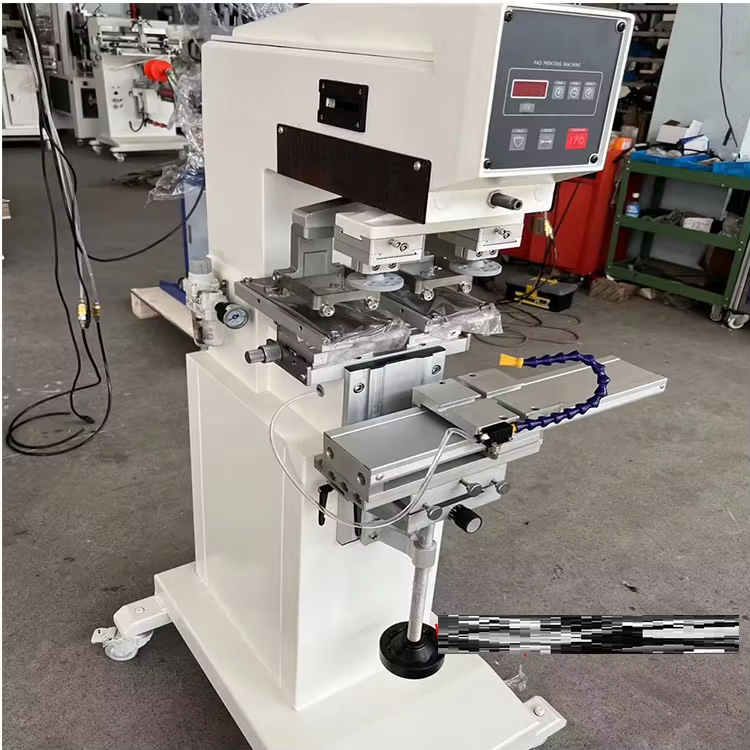
Selecting the appropriate pad printing machine for small parts decoration requires careful consideration of multiple technical and operational factors that directly impact production quality, efficiency, and cost-effectiveness. The precision demands of decorating small components present unique challenges that distinguish them from standard pad printing applications, making machine selection a critical decision for manufacturing success. Understanding how component size, material characteristics, and production volume requirements influence pad printing machine specifications will guide you toward the most suitable equipment investment.
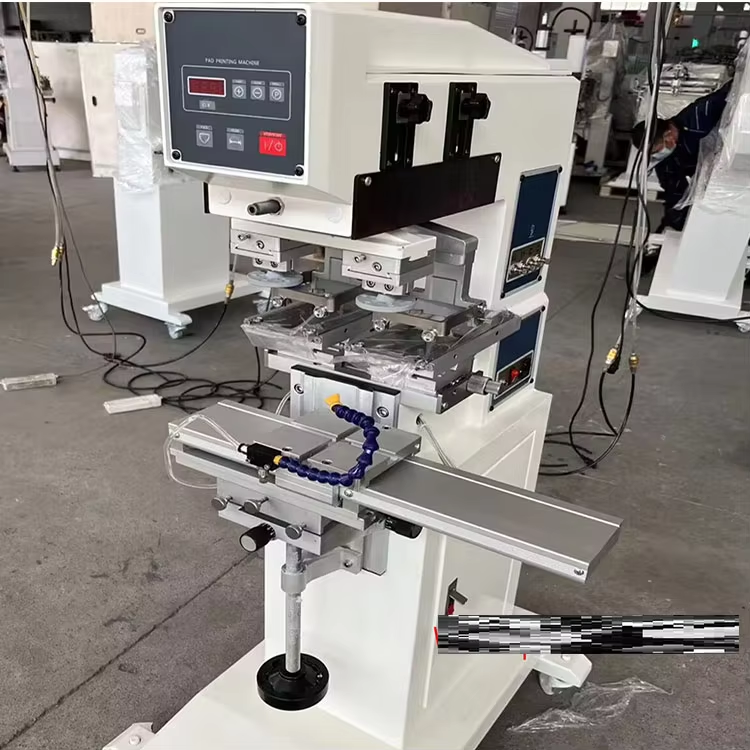
Small parts decoration demands exceptional accuracy and repeatability from your pad printing machine, as even minor variations become highly visible on compact surfaces. The relationship between pad size, ink transfer characteristics, and registration precision becomes increasingly critical as component dimensions decrease. Modern pad printing machines designed for small parts incorporate advanced features like micro-registration systems, precision fixture designs, and specialized pad materials that ensure consistent results across thousands of production cycles.
Machine Size and Configuration Requirements
Workspace Dimensions and Component Accommodation
The physical workspace of your pad printing machine must accommodate not only the small parts themselves but also the fixtures, tooling, and handling mechanisms required for precise positioning. Compact pad printing machines with workspace dimensions ranging from 100mm to 200mm typically provide optimal efficiency for small component decoration while maintaining the precision necessary for quality results. Consider how your specific part geometry will interface with the machine's fixture system and whether custom tooling development will be required.
Machine configuration flexibility becomes crucial when decorating various small parts with different shapes, sizes, and handling requirements. Multi-station configurations allow for efficient production of mixed part types, while single-station machines may offer superior precision for dedicated high-volume applications. The choice between manual, semi-automatic, and fully automatic operation depends on your production volume requirements and the complexity of part handling procedures.
Platform Stability and Vibration Control
Small parts decoration requires exceptional platform stability to maintain registration accuracy throughout the printing cycle. High-quality pad printing machines incorporate robust base construction, precision linear guides, and vibration dampening systems that minimize movement during the critical ink transfer phase. The machine's structural rigidity directly impacts print quality, particularly when working with intricate designs or multiple color applications on small surfaces.
Evaluate the machine's foundation design and mounting requirements to ensure compatibility with your production environment. Some compact pad printing machine models incorporate integrated vibration isolation, while others may require additional environmental controls to achieve optimal performance. Consider factors like floor vibration, ambient temperature stability, and air quality when assessing machine placement requirements.
Precision and Registration Capabilities
Micro-Registration Systems
Micro-registration capabilities distinguish professional small parts pad printing machines from general-purpose equipment, enabling precise positioning adjustments in increments as small as 0.01mm. These systems typically incorporate fine-adjustment mechanisms for both X and Y axis positioning, along with rotational alignment controls that ensure perfect image placement on small components. Advanced pad printing machines feature digital readouts and mechanical locking systems that maintain registration settings across production runs.
The registration system's repeatability specification directly impacts production consistency and waste reduction in small parts applications. Look for pad printing machines that guarantee registration repeatability within ±0.05mm or better, as this precision level supports quality requirements for most small component decoration projects. Consider whether your applications require registration between multiple colors or simply accurate placement of single-color graphics relative to part features.
Vision Systems and Automated Alignment
Modern pad printing machines designed for small parts often incorporate vision systems that automatically detect part position and orientation, eliminating manual alignment procedures that introduce variability. Camera-based systems can identify part edges, reference features, or fiducial marks to ensure consistent image placement regardless of minor variations in part positioning within fixtures. This technology becomes particularly valuable when decorating irregularly shaped small components or parts with critical aesthetic requirements.
Automated alignment systems integrated with pad printing machines can significantly reduce setup time and operator skill requirements while improving overall production consistency. Evaluate whether vision system capabilities justify the additional investment for your specific applications, considering factors like part geometry complexity, production volume, and quality requirements. Some pad printing machines offer modular vision system integration that allows future capability expansion as production needs evolve.
Ink System Considerations
Ink Cup Technology and Precision
Ink cup systems provide superior ink control and consistency compared to open ink well designs, making them particularly suitable for small parts pad printing applications where precise ink film thickness control is essential. Sealed ink cup technology minimizes solvent evaporation and maintains consistent ink viscosity throughout extended production runs, reducing color variation and improving print quality. The ink cup's sealing system and doctor blade design directly impact the quality of ink transfer to the pad printing machine's silicon pad.
Consider ink cup capacity relative to your production volume requirements and changeover frequency when selecting a pad printing machine for small parts decoration. Smaller capacity ink cups provide better ink turnover for low-volume applications, while larger systems support extended production runs without interruption. Evaluate the ink cup's doctor blade adjustment mechanisms and replacement procedures to understand long-term operating costs and maintenance requirements.
Multi-Color Capabilities
Multi-color decoration of small parts requires precise color-to-color registration and consistent ink density across all printing stations. Pad printing machines with sequential color printing capabilities allow complex graphics application while maintaining tight registration tolerances essential for small component decoration. Consider whether your applications require simultaneous multi-color printing or if sequential color application will meet production timing requirements.
The pad cleaning system between color stations significantly impacts production efficiency and print quality in multi-color small parts applications. Automatic pad cleaning systems reduce cycle time and improve consistency compared to manual cleaning procedures, while specialized cleaning solvents ensure complete ink removal without damaging the pad surface. Evaluate the cleaning system's effectiveness and maintenance requirements when comparing pad printing machines for multi-color small parts production.
Automation and Production Integration
Part Handling and Feeding Systems
Automated part handling becomes increasingly important as small component decoration production volumes increase, requiring reliable feeding, positioning, and removal systems that maintain part integrity throughout the printing process. Vibratory bowl feeders, conveyor systems, and robotic pick-and-place mechanisms can integrate with pad printing machines to create fully automated production cells. The part handling system must accommodate the specific geometry and material characteristics of your small components while ensuring consistent positioning accuracy.
Consider the flexibility of automated handling systems when selecting a pad printing machine for small parts decoration, particularly if you anticipate producing various component types or sizes. Modular handling systems allow reconfiguration for different parts without requiring complete equipment replacement, improving overall production versatility. Evaluate the handling system's cycle time capabilities relative to the pad printing machine's production rate to ensure balanced automation performance.
Quality Control Integration
Inline quality control systems integrated with pad printing machines enable real-time monitoring of print quality parameters specific to small parts decoration requirements. Vision inspection systems can detect print defects, registration errors, and incomplete ink coverage while parts remain within the production line, allowing immediate correction or rejection procedures. This capability becomes particularly valuable when decorating high-value small components where defect detection after production completion results in significant waste costs.
Statistical process control integration allows pad printing machines to maintain consistent quality parameters through automatic adjustment of printing variables based on quality feedback. Consider whether your small parts decoration applications require documented quality control records for traceability or regulatory compliance purposes. Some advanced pad printing machines incorporate data logging capabilities that track key process parameters and quality metrics for comprehensive production documentation.
Material Compatibility and Environmental Factors
Substrate Material Considerations
Small parts decoration often involves diverse substrate materials including plastics, metals, ceramics, and composites, each requiring specific pad printing machine configuration and ink system compatibility. Surface energy characteristics, thermal expansion properties, and chemical compatibility all influence ink adhesion and long-term durability of decorated small components. Your pad printing machine selection must accommodate the specific substrate materials used in your applications while providing flexibility for future material variations.
Pre-treatment requirements for certain substrate materials may influence pad printing machine configuration and production line layout. Plasma treatment, chemical etching, or primer application systems can integrate with pad printing machines to ensure optimal ink adhesion on challenging substrates. Consider the space requirements and utility needs for any required pre-treatment systems when planning your small parts decoration production setup.
Environmental Control Requirements
Temperature and humidity control significantly impact pad printing machine performance and print quality, particularly when decorating small parts where environmental variations can cause registration shifts or ink performance changes. Consistent environmental conditions ensure stable pad material properties, predictable ink behavior, and reliable curing characteristics throughout production runs. Some pad printing machines incorporate environmental monitoring systems that alert operators to conditions outside acceptable ranges.
Ventilation and fume extraction requirements vary based on the ink systems used with your pad printing machine and the production environment's safety regulations. Enclosed ink cup systems reduce solvent emissions compared to open well designs, while automated cleaning systems may require additional ventilation capacity. Consider the long-term operating costs associated with environmental control systems when evaluating pad printing machine options for small parts decoration applications.
FAQ
What is the minimum part size that can be effectively decorated using a pad printing machine?
Most modern pad printing machines can effectively decorate parts as small as 2-3mm in diameter, with some specialized systems capable of handling even smaller components. The limiting factors include pad size capabilities, fixture design constraints, and registration system precision. For extremely small parts under 1mm, micro-pad printing systems with specialized tooling may be required to achieve acceptable quality results.
How does pad size selection affect small parts decoration quality?
Pad size selection directly impacts ink transfer consistency and image quality on small parts, with smaller pads generally providing better control and precision for compact surfaces. The pad should typically be 2-3 times larger than the image area to ensure complete ink pickup and uniform transfer pressure. Harder pad durometer ratings often work better for small parts as they maintain shape stability and provide precise image edges on small surfaces.
What maintenance requirements should be expected for a pad printing machine used in small parts production?
Regular maintenance for small parts pad printing machines includes daily pad cleaning and inspection, weekly ink cup and doctor blade examination, and monthly precision calibration checks. The increased accuracy demands of small parts decoration require more frequent registration verification and pad replacement compared to larger component applications. Preventive maintenance schedules should account for the higher precision requirements and potential for faster wear on critical components.
Can one pad printing machine handle multiple small part types efficiently?
A properly configured pad printing machine can handle multiple small part types through quick-change fixture systems and adjustable registration mechanisms. However, efficiency depends on setup complexity and changeover time requirements between different parts. For high-mix, low-volume production, flexible fixture designs and programmable registration settings can minimize changeover time, while dedicated single-part setups may be more efficient for high-volume applications.
Table of Contents
- Machine Size and Configuration Requirements
- Precision and Registration Capabilities
- Ink System Considerations
- Automation and Production Integration
- Material Compatibility and Environmental Factors
-
FAQ
- What is the minimum part size that can be effectively decorated using a pad printing machine?
- How does pad size selection affect small parts decoration quality?
- What maintenance requirements should be expected for a pad printing machine used in small parts production?
- Can one pad printing machine handle multiple small part types efficiently?